


Global Cotton Fabric Market Outlook 2026: Demand Surges in Sustainable Apparel
Sustainable fashionis truly transforming the cotton fabric market. An increasing number of consumers are becoming aware of how their choices affect the environment. Did you know that two-thirds of consumers are willing to pay more for sustainable products? This rising awareness is prompting many to opt for organic Cotton Textiles instead of synthetic alternatives. They recognizecombed cotton fabric as a leading choice for sustainable apparel raw materials, particularly since 75% of shoppers favor natural fibers like cotton. It’s thrilling to see this shift towards a greener future, especially in light of current textile market trends!
Key Takeaways
- Sustainable fashion is reshaping the cotton fabric market, with two-thirds of consumers willing to pay more for eco-friendly products.
- The global cotton fabric market is projected to grow significantly, reaching USD 89.48 billion by 2026, driven by demand for sustainable textiles.
- Millennials and Generation Z are leading the shift towards sustainable cotton apparel, actively seeking brands that align with their values.
- Certifications like GOTS and OEKO-TEX are crucial for consumers, ensuring that cotton products meet high environmental and social standards.
- Technological advancements, such as precision agriculture and waterless dyeing, are making cotton production more sustainable and efficient.
Current Market Conditions
Let me share what’s happening right now in the cotton fabric market. The global market was valued at a whopping USD 41.9 billion in 2024. That’s huge! And it’s not stopping there. Experts expect it to grow to about USD 43.8 billion in 2025 and then jump to USD 55 billion by 2030. This means the market is growing steadily at around 4.6% each year from 2025 to 2030. Why? People love breathable, natural fibers, and more shoppers want sustainable cotton fabric options.
Here’s a quick look at where the demand is heating up the most:
| Region | What’s Happening |
|---|---|
| Asia-Pacific | The biggest producer and exporter, led by India, China, and Bangladesh. |
| North America | A major importer, with brands focusing on certified and traceable cotton fabrics. |
| Europe | Strong push for organic and traceable cotton fabrics, thanks to strict sustainability laws. |
You can see Asia-Pacific leads in production, while North America and Europe focus more on buying sustainable cotton fabric that meets strict environmental standards.
What’s driving this demand? Several key factors come into play:
| Factor | Why It Matters |
|---|---|
| Sustainability Initiatives | Fashion brands are adopting eco-friendly practices, pushing demand for sustainable materials. |
| Eco-Friendly Consumer Demand | Shoppers care more about the environment and prefer products that reflect that. |
| Cotton’s Textile Dominance | Cotton remains a top choice for apparel and home textiles, keeping its strong market presence. |
On top of that, environmental concerns in the textile industry push manufacturers and consumers toward greener fabrics. The rise of organic and sustainable fashion shows how people want to make ethical choices. Plus, health worries about chemicals used in traditional textile production make safer cotton fabric options more popular.
However, the market isn’t without challenges. Trade policies and tariffs create some uncertainty. For example, ongoing negotiations and the threat of tariffs between big players like the U.S., China, and the EU cause supply chain disruptions. This can increase costs and force brands to rethink where they source their cotton fabric.
Pricing also plays a role. Sustainable fabrics, including organic cotton, often cost more. This happens because raw materials and processing must meet strict environmental standards. Certifications like GOTS or OEKO-TEX add complexity and cost. Smaller production runs for sustainable cotton fabric mean fewer economies of scale, which can push prices higher.
Despite these hurdles, the cotton fabric market looks promising. The growing demand for sustainable apparel keeps the momentum going. I find it exciting to watch how this market evolves as more people choose eco-friendly options.
Consumer Preferences for Sustainable Apparel

When I think about consumer preferences for sustainable apparel, I see a clear trend emerging. More and more people are choosing clothing made from natural fibers like cotton. This shift is not just a passing fad; it reflects a deeper commitment to sustainability. In fact, 72% of consumers prefer apparel made from natural fibers, with Baby Boomers leading the charge at 80%. It’s exciting to witness this change!
Several factors influence these preferences. Here are the top considerations for consumers when selecting sustainable cotton apparel:
- 43% of consumers prioritize clothing made with natural fibers like cotton.
- 64% actively check fiber content labels to avoid synthetic materials like rayon.
- 78% express concern about deforestation linked to rayon production.
These statistics show that consumers are becoming more discerning about what they wear. They want to make choices that align with their values.
Now, let’s take a look at the demographics driving this trend. The following table highlights the key consumer groups interested in sustainable cotton apparel across various markets:
| Market | Demographics |
|---|---|
| UK | Millennials, Generation Z, Working Professionals, Eco-Conscious Consumers |
| France | Millennials, Generation Z, Working Professionals, Eco-Conscious Consumers |
| Russia | Millennials, Generation Z, Working Professionals, Eco-Conscious Consumers |
| Italy | Millennials, Generation Z, Working Professionals, Eco-Conscious Consumers |
| Spain | Millennials, Generation Z, Working Professionals, Eco-Conscious Consumers |
| Rest of Europe | Millennials, Generation Z, Working Professionals, Eco-Conscious Consumers |
| APAC | Millennials, Generation Z, Working Professionals, Eco-Conscious Consumers |
| China | Millennials, Generation Z, Working Professionals, Eco-Conscious Consumers |
| India | Millennials, Generation Z, Working Professionals, Eco-Conscious Consumers |
| Japan | Millennials, Generation Z, Working Professionals, Eco-Conscious Consumers |
| South Korea | Millennials, Generation Z, Working Professionals, Eco-Conscious Consumers |
| Malaysia | Millennials, Generation Z, Working Professionals, Eco-Conscious Consumers |
| Thailand | Millennials, Generation Z, Working Professionals, Eco-Conscious Consumers |
| Indonesia | Millennials, Generation Z, Working Professionals, Eco-Conscious Consumers |
| Rest of APAC | Millennials, Generation Z, Working Professionals, Eco-Conscious Consumers |
| South America | Millennials, Generation Z, Working Professionals, Eco-Conscious Consumers |
It’s clear that Millennials and Generation Z are leading the charge in sustainable fashion. They are not just passive consumers; they actively seek out brands that align with their values.
Interestingly, many consumers are willing to pay a premium for sustainable cotton apparel. Here’s what I found:
- 59% of global consumers are ready to spend more on clothing made from natural fibers.
- 75% say they would pay extra for apparel made from cotton.
This willingness to invest in sustainable options shows that consumers are prioritizing quality and ethical production over fast fashion.
Lastly, certifications play a significant role in consumer choices. Shoppers often look for labels that guarantee sustainability. Some of the most sought-after certifications include:
- Organic Textile Standard (GOTS)
- Fair-trade certification
- OEKO-TEX 100
- B Corp Certification
- Sustainable Apparel Coalition (SAC)
These certifications provide reassurance that the cotton fabric used in their apparel meets high environmental and social standards.
As I reflect on these trends, it’s clear that consumer preferences are reshaping the cotton fabric market. The demand for sustainable apparel is not just a trend; it’s a movement toward a more responsible and ethical fashion industry.
Impact of Sustainability on Cotton Production

Sustainability is reshaping how we produce cotton, and I find it fascinating to see the positive changes. Farmers are adopting new practices that not only boost yields but also protect our environment. For instance, the U.S. Cotton Trust Protocol has led to a remarkable 14% increase in cotton yields. That’s a significant improvement! Plus, farmers using sustainable methods can save about $47 per acre and increase their net income by $100 per acre. It’s a win-win situation for both the farmers and the planet.
Here are some key benefits of sustainable cotton production:
- Precision Agriculture: This approach uses data-driven technologies to optimize resource use. It reduces waste and minimizes environmental impact.
- Regenerative Agriculture: This method focuses on restoring soil health and biodiversity. It aims to sequester carbon and cut down greenhouse gas emissions.
- Circular Economy: By promoting the recycling of Cotton Fibers, we can minimize waste and lessen the need for virgin materials. This significantly lowers the overall environmental impact.
However, transitioning to sustainable practices isn’t without its challenges. Farmers face several hurdles, including:
- Pest Pressures: Adapting to new pest challenges while using selective pesticides can be tricky.
- Lack of Access to Organic Soil Amendments: Obtaining necessary organic materials can hinder soil health.
- Limited Knowledge: Many farmers lack awareness of regenerative practices, complicating the transition.
- Economic Constraints: The upfront costs for new practices can be a barrier, especially for small farms.
- Resistance to Change: Familiarity with traditional methods can make it hard to adopt new techniques.
Despite these challenges, the shift toward sustainable cotton production is crucial. It not only enhances yields but also contributes to a healthier planet. I believe that as more farmers embrace these practices, we’ll see a brighter future for cotton fabric and the fashion industry as a whole.
Technological Advancements in Cotton Fabric Industry
I find it fascinating how technology is revolutionizing the cotton fabric industry. Innovations are not just improving efficiency; they’re also making cotton production more sustainable. Here are some key advancements that caught my attention:
- cotton fabric market.armers now use sensors, drones, and satellite imagery to optimize water and nutrient use. This technology helps reduce waste and ensures crops get exactly what they need.
- Waterless Dyeing Techniques: These methods significantly lower water usage and chemical application. It’s amazing to see how digital printing can create vibrant colors without harming the environment.
- Advanced Recycling Technologies: These innovations convert post-consumer waste into high-quality fibers. This promotes a circular economy, allowing us to reuse materials instead of discarding them.
I also learned that water application rates in U.S. cotton agriculture decreased by 38% from 1980 to 2020. This reduction is thanks to advancements in irrigation technologies. Farmers are now better at scheduling irrigation and delivering water precisely where it’s needed. Plus, integrated pest management (IPM) practices are gaining traction. They help reduce pesticide use while effectively managing pest populations.
Another exciting development is the rise of digital supply chain solutions. These tools enable traceability, allowing cotton to be tracked from farm to finished product. Digitally enabled cotton gins serve as checkpoints, providing verifiable data that brands rely on to validate their sustainability claims. This transparency builds trust with consumers who want to know where their cotton fabric comes from.
As I reflect on these advancements, it’s clear that technology plays a crucial role in shaping a more sustainable future for cotton. I’m excited to see how these innovations will continue to evolve and impact the industry.
Future Outlook for the Cotton Fabric Market in 2026
As I look ahead to 2026, I see a bright future for the cotton fabric market. The global industry is projected to reach a staggering market size of USD 89.48 billion. This growth reflects the increasing demand for sustainable textiles and the ongoing shift in consumer preferences.
Several key drivers will shape this market:
- Stable but low cotton prices will benefit apparel makers and retailers.
- Regenerative agriculture practices will pave the way for long-term profitability and crop resilience.
- A significant 74% of shoppers favor cotton or cotton blends, with 59% willing to pay more for natural fibers.
- Changes in global supply and demand dynamics, especially with China's reduced imports and increased supply from Brazil, will influence market conditions.
- Trade policy uncertainties, including higher tariffs on U.S. imports, pose risks to U.S. apparel demand.
The anticipated increase in demand for sustainable cotton fabric is driven by the overarching trend of sustainability in textiles. Manufacturers are responding to this shift by prioritizing eco-friendly materials, indicating a significant market transformation.
However, challenges remain. Here are some hurdles the cotton fabric market may face in achieving sustainability goals by 2026:
- Environmental impacts from cotton farming, including high water usage and chemical reliance.
- Economic pressures from regulatory changes, such as the EU Carbon Border Adjustment Mechanism (CBAM) tariffs expected in 2026.
- Social demands for transparency and sustainable practices, driven by consumer preferences for sustainable fashion.
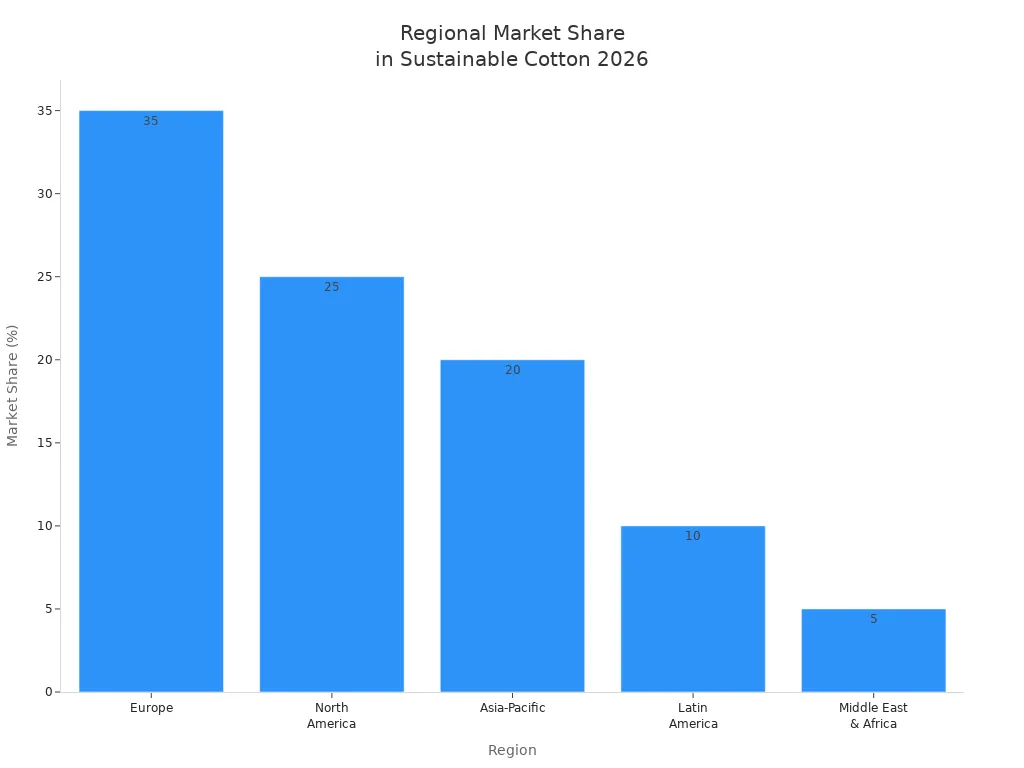
In terms of regional growth, I find it interesting to see how different areas will contribute to the market. Here’s a quick look at the forecasted growth in sustainable cotton fabric consumption by region:
| Region | Key Countries/Areas | Market Share (%) | Growth Drivers and Notes |
|---|---|---|---|
| North America | United States, Canada | ~25% | Rising demand in fashion and home decor for sustainable textiles |
| Europe | Germany, France, UK, Italy | ~35% | Leading sustainability initiatives, innovation, and recycling focus |
| Asia-Pacific | China, Japan, India | ~20% | Rapid adoption of sustainable practices; India driven by local manufacturing and awareness |
| Latin America | Brazil, Mexico | ~10% | Emerging market focusing on organic cotton and eco-friendly materials |
| Middle East & Africa | Turkey, UAE | ~5% | Gradual adoption with growing eco-consciousness |
As I reflect on these trends, it’s clear that the cotton fabric market is on the brink of a significant transformation. The combination of consumer demand, technological advancements, and sustainable practices will shape the future of this industry.
Sustainability is crucial in the cotton fabric market. It not only helps reduce environmental impacts but also meets the growing demand for eco-friendly products. I see that initiatives like organic cotton certifications are paving the way for innovation and market growth.
The potential for growth is immense. As more consumers seek sustainable apparel, brands must adapt to these preferences. I believe that industry stakeholders should embrace sustainable practices, such as waterless dyeing and renewable energy sources. By doing so, they can create a positive impact on the environment and society while tapping into new market opportunities.
Let’s work together to make sustainability the norm in the cotton fabric industry!
FAQ
What is sustainable cotton fabric?
Sustainable cotton fabric comes from cotton grown using eco-friendly practices. This includes organic farming methods that avoid harmful chemicals and promote soil health. I love how this approach benefits both the environment and the farmers.
Why should I choose cotton over synthetic fabrics?
Cotton is breathable, biodegradable, and generally safer for your skin. I prefer it because it feels comfortable and doesn’t contribute to plastic pollution like synthetic fabrics do. Plus, it’s a natural choice for sustainable fashion!
How can I identify sustainable cotton products?
Look for certifications like GOTS, OEKO-TEX, or Fair Trade on labels. These ensure the cotton meets strict environmental and social standards. I always check for these labels when shopping for sustainable apparel.
Are sustainable cotton fabrics more expensive?
Yes, they often cost more due to higher production standards and smaller batch sizes. However, I believe the investment is worth it for the quality and ethical production. Plus, many consumers are willing to pay a premium for sustainability.
How can I support sustainable cotton farming?
You can support sustainable cotton farming by choosing brands that prioritize eco-friendly practices. Additionally, spreading awareness about the benefits of sustainable fashion helps create demand for these products. Together, we can make a difference!